Franklin: A Font That Commands Attention
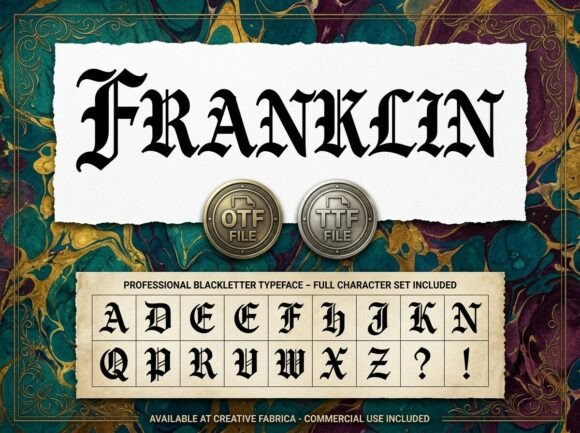
There are fonts that whisper, and there are fonts that shout. Franklin is unapologetically in the latter category. It’s not a workhorse body copy font you’d use for a 10-page report. It’s a statement piece—a bold, all-caps display typeface engineered to be the visual equivalent of a spotlight on a dark stage. If your project needs to make an immediate, powerful impression, this is the kind of typeface that doesn’t just sit on the page; it owns it.
More Than Letters: A Tool for Visual Storytelling
Think of Franklin less as a simple set of characters and more as a design asset with a distinct personality. Its unique artistic elements give it a strong visual identity, making it perfect for creators who want to break away from the ordinary. This isn't just about picking a "cool font." It's about choosing a typeface that aligns with the story you're trying to tell. For a luxury brand, it conveys exclusivity. For a creative agency, it signals innovation. For a music festival poster, it screams energy. The visual personality of a font like Franklin does heavy lifting in establishing mood and context before a single word is even read.
Where Bold Typography Truly Shines
The versatility of a premium display font lies in its application. Because Franklin is all-caps, it’s inherently designed for high-impact scenarios where readability at a glance is paramount. Consider these practical uses:
- Branding & Logo Design: A logo set in Franklin becomes instantly recognizable. Its polished finish ensures it looks professional on everything from a business card to a billboard.
- Packaging Design: On a shelf crowded with competitors, your product’s name in a striking typeface can be the difference between being picked up or passed over. It’s perfect for product names, taglines, or featured ingredients.
- Social Media & Digital Marketing: In the fast-scroll world of Instagram or TikTok, you have milliseconds to capture attention. Use Franklin for bold headlines in your graphics, YouTube thumbnails, or promotional banners to stop the scroll.
- Editorial & Print Materials: Magazine covers, event posters, and invitation suites benefit enormously from a display font that sets a sophisticated or energetic tone. It’s ideal for main titles and decorative initials.
- Merchandise & Apparel: A strong typeface translates beautifully to t-shirts, tote bags, and hats, turning everyday items into wearable statements.
Pairing and Practicality: Making It Work for Your Project
Using a bold display font effectively is a balancing act. You wouldn’t pair a loud, decorative serif font with another loud, decorative script font—they’d compete for attention. The key is contrast. Franklin’s strong personality makes it an excellent partner for cleaner, more neutral fonts.
For a professional presentation, try pairing it with a simple sans-serif font for body text. For a more classic or editorial feel, a clean serif font can provide elegant contrast. Always test your font pairings in context. Mock up your design to see how the headline in Franklin interacts with the subheadlines and body copy. Does the hierarchy feel clear? Is the main message immediately understandable?
Remember the all-caps nature of this typeface. It’s a deliberate design choice for maximum impact, but it does mean you need to consider readability for longer strings of text. For a company name or a three-word headline, it’s perfect. For a full paragraph of instructions, you’d want to use a different font. This is where understanding your project goals is crucial. Are you creating a momentary visual punch or facilitating long-form reading? Franklin is built for the former.
Understanding What You’re Getting
When you invest in a commercial font, you’re getting more than just a pretty alphabet. You’re getting professionally crafted design files that ensure your work looks crisp and consistent everywhere. Franklin typically comes in the two most essential formats:
- OTF (OpenType Font): This is the professional standard. It works seamlessly in advanced design software like Adobe Illustrator, Photoshop, and InDesign, giving you access to all the font’s features and glyphs.
- TTF (TrueType Font): This format offers universal compatibility. It’s the file you’ll use for web design, in Canva, in Microsoft Office applications, or for any situation where broad device support is necessary.
Having both files means you can use your chosen typeface across every facet of a project—from designing the initial logo in Illustrator to creating social media posts in Canva to finalizing a presentation in PowerPoint—without ever worrying about compatibility issues. This kind of consistency is a cornerstone of strong brand identity.
A Final Thought on Choosing Your Tools
Choosing a font is a creative decision that impacts how your audience perceives your message. It’s worth taking the time to explore options that truly fit your vision. A typeface like Franklin is a specialized tool. It won’t be the right choice for every project, but for the ones that need a bold, confident, and artistic voice, it can be transformative. Before you finalize any design, consider the licensing to ensure it covers your intended use, whether for personal projects or commercial products. Ultimately, the best typography doesn’t just look good—it feels intentional, amplifies your message, and connects with your audience on a visual level.