Constance: A Typeface That Commands the Room
There are fonts that whisper, and there are fonts that walk into a room and start a conversation. If you’re tired of blending in with the same geometric sans-serifs and predictable serifs that dominate the digital landscape, it might be time to look for something with a bit more soul. You know the feeling—you’re designing a logo for a new boutique or a header for a lifestyle blog, and every font you try feels like it’s wearing a beige cardigan. Safe, yes. Boring, definitely. What you need is a typeface that has the confidence to stand alone.
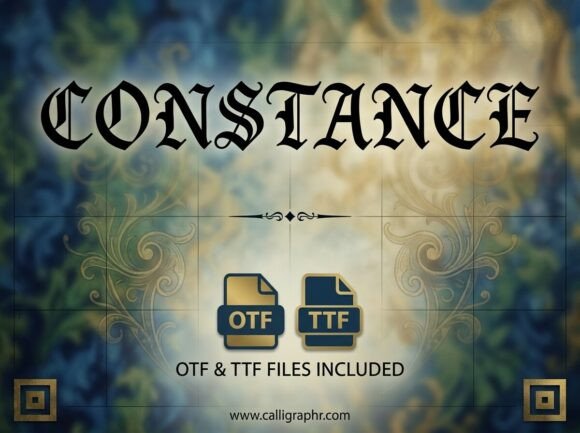
Enter a display typeface that feels less like a digital file and more like a piece of art. This isn't just another set of letters; it’s a statement piece. It’s designed specifically for those moments where you need your typography to do the heavy lifting. Imagine a font that carries its own visual weight, with unique artistic flourishes and a personality strong enough to anchor a brand identity. That is the core of this design—it refuses to sit quietly in the background. It is built to be the hero of your layout.
Why "All-Caps" Works for High-Impact Branding
Before you even look at the aesthetic, there is a technical reality to this typeface that shapes how you will use it: it is an all-caps display font. For some, this might seem like a limitation, but in the world of branding and headline typography, it is actually a strategic advantage. Think about the most iconic fashion houses or the headers of high-end editorial magazines. They often rely on uppercase typography to convey authority, stability, and importance.
When you strip away the lowercase letters, you force the viewer to look at the shape of the word rather than just reading it. This creates a distinct silhouette that helps with brand recognition. However, this also means you need to be strategic. This typeface is not intended for writing your next novel or setting the body text of a corporate report. It is strictly for high-impact moments. It is the exclamation point at the end of your visual sentence.
Because every letter is treated as an individual piece of artwork, using it for short, punchy text creates a texture that is incredibly satisfying. It works best when it has room to breathe. Cramping this font into tight spaces or using it for long paragraphs would be like hanging a massive oil painting in a closet—you lose the effect of the composition. Give it space, and it rewards you with an incredible visual presence.
Practical Applications: From Packaging to Social Media
So, where does a font like this actually fit into your workflow? The versatility of a strong display typeface lies in its ability to adapt to different media while maintaining its core character. If you are a small business owner, you know that consistency is key to building trust. You want your packaging to feel connected to your Instagram feed, which in turn needs to feel connected to your website.
Consider the world of packaging design. If you are selling artisanal coffee, luxury candles, or handmade cosmetics, the label is your handshake with the customer. A font with a "stunning decorative" quality immediately signals that the product inside is premium. It suggests that care was taken in the presentation, which implies care was taken in the product itself. It elevates a simple brown box or glass jar into something that looks curated and expensive.
For digital creators and marketers, the applications are just as broad. In the fast-scrolling environment of social media, you have about a second to stop a thumb. Generic text gets lost. But a bold, artistic headline on a YouTube thumbnail, a Pinterest pin, or an Instagram Story graphic acts as a visual magnet. It breaks the pattern of the feed. It works beautifully for:
- Logo Design: Creating a wordmark that is instantly recognizable.
- Website Hero Images: Setting the tone immediately upon landing on a page.
- Poster Art: Capturing attention from a distance with bold shapes.
- Merchandise: Adding a trendy, artistic flair to t-shirts or tote bags.
- Invitations: Setting a sophisticated mood for weddings or galas.
Mastering Font Pairing and Readability
Using a decorative display font effectively is a balancing act. Because this typeface is so expressive and detailed, it acts as the "loud" voice in your design. If you pair it with another loud voice—like a heavy script font or a complex handwritten style—the result will be visual chaos. The audience won't know where to look, and your message gets lost.
The golden rule of typography applies here: contrast is king. To make a premium font like this shine, you need to pair it with something quiet and functional. Think about a clean sans serif font for your body text. The simplicity of a sans serif creates a neutral backdrop that allows the artistic details of the display font to pop without competition. Alternatively, a very simple, light serif font can work well for a more editorial, magazine-style aesthetic.
Readability is another crucial factor. While the font is designed to be legible, its primary goal is style. Therefore, you should pay attention to tracking (the space between letters). Decorative fonts often benefit from a little extra breathing room. Increasing the tracking slightly can transform a headline from feeling cramped and heavy to feeling airy and luxurious. Test your designs at the size they will be viewed. A logo needs to be legible on a business card, but a poster header needs to be readable from ten feet away.
Technical Assurance for Professional Projects
Nothing is more frustrating than falling in love with a design concept only to find that the font file doesn't work with your software. That is why the file formats included in this package matter. You receive both OTF (OpenType Font) and TTF (TrueType Font) files.
If you are working in professional layout software like Adobe Illustrator, InDesign, or Photoshop, the OTF file is your go-to. It is the industry standard for advanced design work. However, if you are working on a PC or using software that requires broader compatibility, the TTF file ensures that you can install and use the font on virtually any device without hassle. This dual-format delivery ensures that whether you are a seasoned graphic designer or a business owner using Canva to create your own assets, you are covered.
Making the Decision to Invest
Choosing a creative font is an investment in your brand's visual identity. It is not just about buying a file; it is about buying a personality for your project. When you choose a typeface that breaks away from the ordinary, you are signaling to your audience that your brand is also different. You are telling them that you value aesthetics and that you pay attention to the details.
Before making the final purchase, take a moment to visualize your current projects. Do you have a headline that feels flat? Is your logo missing that "wow" factor? Does your packaging look like everyone else's? If the answer is yes, a bold, decorative typeface might be the missing puzzle piece.
Remember to check the licensing for your specific needs, especially if you are planning to use it for merchandise or large-scale commercial distribution. But for most standard creative projects—from blogs to social media to local business branding—this typeface offers a robust solution for anyone looking to add a touch of artistic flair to their work. It’s time to stop settling for ordinary and let your typography do the talking.