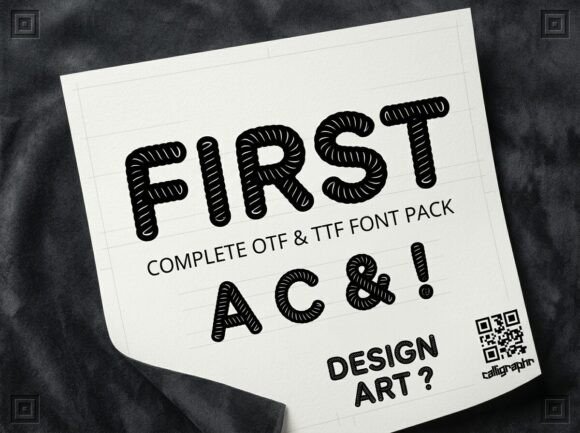
First: A Bold Display Typeface for Headlines and Logos
There are moments in design when subtlety simply isn't the goal. Sometimes, a project demands a voice that is loud, proud, and impossible to ignore. This is precisely where "First" enters the conversation. This typeface is not merely a collection of letters; it is a visual statement engineered to dominate the page. Designed as a stunning decorative display font, it is built specifically to be the center of attention. For creators looking to break away from the ordinary, this font offers a unique artistic flair combined with a strong visual personality. It is the ideal choice when you need to make an immediate impact, whether you are launching a brand, designing a logo, or creating packaging that jumps off the shelf.
The visual appeal of this font lies in its ability to balance artistic expression with a polished, professional finish. While many decorative fonts can look messy or difficult to read, "First" maintains a structured elegance. It is versatile enough for bold headlines and artistic logos, ensuring that your typography doesn't just decorate the page but actually communicates a message of quality and confidence. It is a premium font asset that serves as a bridge between raw creativity and market-ready professionalism.
Capturing Attention in Branding and Logo Design
When you are building a brand identity, the typography you choose acts as the "handshake" between your business and your audience. A standard sans serif font might be safe, but it often lacks the personality required to stand out in a saturated market. This is where a creative font like "First" becomes a strategic asset. It is particularly effective for businesses that position themselves as bold, innovative, or artistic. Think of a boutique streetwear brand, a high-end creative agency, or a modern lifestyle blog. Using this display font for your wordmark or logotype instantly communicates that your brand is unafraid to take risks.
The strong visual personality of the typeface ensures that your logo is memorable. In logo design, distinctiveness is key. You want a mark that people can recall even if they only glance at it for a second. Because "First" features unique artistic elements, it creates a visual hook that aids in brand recognition. It transforms standard letters into visual icons, helping to solidify your brand's image in the minds of your customers.
Transforming Packaging and Print Materials
Product packaging is often the first physical interaction a customer has with a brand, and typography plays a massive role in that experience. If you are designing labels for artisanal goods, cosmetics, or beverages, the font on the front of the box needs to do the heavy lifting of marketing. "First" is perfectly suited for this environment. Its bold nature makes it ideal for the front display panel of packaging, where you need to convey the product name and brand clearly from a distance.
Beyond packaging, consider the impact this font can have on print materials. Posters, flyers, and event invitations often rely entirely on typography to set the mood. A standard serif font might suggest a traditional, formal event, but a bold display typeface suggests energy, excitement, and modernity. For an art show, a music festival, or a grand opening, using "First" for the headlines ensures that the promotional material feels as dynamic as the event itself. It adds a layer of texture and depth that flat, standard fonts simply cannot provide.
Digital Presence: Websites, Social Media, and Beyond
In the digital realm, capturing attention is a battle fought in milliseconds. Website visitors scan rather than read, and social media users scroll rapidly past content that doesn't immediately grab them. Integrating a striking typeface like "First" into your web design headers or social media graphics can significantly increase engagement. It acts as a visual stop-sign, encouraging the user to pause and take in the message.
For content creators and bloggers, using a distinctive display font for section headers or featured images can help establish a cohesive aesthetic. It breaks up the monotony of body text and guides the reader's eye through the content hierarchy. However, it is important to practice strategic font pairing. Because "First" is a high-impact display font, it works best when paired with a cleaner, more neutral body text font—such as a simple sans serif or a legible serif font. This contrast ensures that your design remains readable while still maintaining that creative spark.
Furthermore, this font is a powerful tool for digital products and marketing assets. Whether you are designing PDF guides, eBook covers, or email headers, the typography needs to look professional. Using a premium font like "First" elevates the perceived value of your digital products, making them look like polished, high-quality assets rather than amateur drafts.
Practical Usage and File Compatibility
One of the most practical aspects of this typeface is the variety of file formats included in the purchase. You will receive both OTF (OpenType Font) and TTF (TrueType Font) files. The OTF file is the professional standard for advanced design and layout software like Adobe Illustrator, Photoshop, and InDesign, offering the best quality for high-end design work. The TTF file provides universal compatibility, ensuring the font works seamlessly across all devices and operating systems, which is essential for web use and basic word processing.
However, there is a crucial design consideration to keep in mind when working with "First." This font is an ALL-CAPS typeface, meaning it includes uppercase letters only and does not have lowercase characters. This is a deliberate design choice intended for high-impact scenarios. It is specifically crafted for headlines, logos, and decorative initials where every letter is treated as a work of art. It is not intended for writing long paragraphs of body text.
This characteristic makes it a specialized tool. When you use "First," you are prioritizing style and impact over the fluid readability required for long-form reading. This is why it is perfect for a hero section of a website, a magazine cover title, or the name on a business card, but not for the terms and conditions section of a contract. Understanding this distinction is key to using the font effectively. By reserving this typeface for moments where you want to make a statement, you maintain its power and prestige.
Ensuring Professional Presentation
Ultimately, the goal of any design asset is to improve the quality of your final output. A font like "First" contributes to a professional presentation by offering a level of artistry that generic system fonts lack. It helps bridge the gap between a DIY aesthetic and a professional brand identity. When your typography aligns with your brand's voice and the project's goals, the entire design feels more cohesive and intentional.
For entrepreneurs and small business owners, investing in a quality typeface is an investment in your brand's future. It ensures visual consistency across your website, your social media, and your printed collateral. It tells your audience that you pay attention to details and that you value quality. Whether you are a designer looking for a new tool for your kit or a business owner crafting your next big campaign, "First" offers the versatility and visual punch needed to make your work stand out.