Madeline: The Decorative Typeface That Commands Attention
Every now and then, a design project lands on your desk—or in your creative space—that demands something beyond the usual sans serif or understated serif. You know the kind: a boutique brand that wants to scream luxury, a book cover that needs to whisper mystery, or a social media campaign where the headline has to stop the scroll instantly. In those moments, you're not looking for a font that blends in; you need one that performs. That's precisely where a typeface like Madeline enters the conversation, not as a quiet background player, but as the undisputed star of the show.
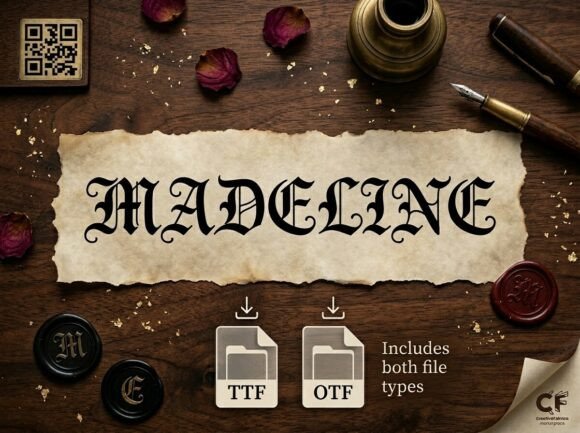
Madeline is a decorative display typeface designed with a singular, unapologetic purpose: to be the visual focal point. It’s built from unique artistic elements, giving each letterform a strong, distinct personality. Think of it as the typographic equivalent of a statement necklace or a bold architectural feature—it’s meant to draw the eye and hold it. This isn’t a workhorse font for body text; it’s a specialist tool for creators who intentionally want to break away from the ordinary and inject a dose of high-impact artistry into their work.
Understanding Its Visual Language and Best Uses
The character of Madeline lies in its decorative nature. It’s an all-caps display typeface, meaning it’s designed exclusively for uppercase letters. This is a crucial detail for planning your projects. The absence of lowercase letters isn’t a limitation but a deliberate design choice that enhances its suitability for specific, high-impact applications. Every letter is crafted to be a miniature work of art, making it perfect for contexts where you need maximum visual punch in minimal space.
So, where does this font truly shine? Its versatility for bold, attention-grabbing applications is impressive. Consider these practical uses:
- Branding & Logo Design: For brands in the luxury, artisanal, beauty, or boutique spaces, Madeline can form the cornerstone of a memorable logo. Its decorative flair conveys exclusivity and creativity, helping a brand stand out in a crowded market.
- Packaging Design: Imagine this font on the label of a gourmet food product, a craft spirit, or a high-end cosmetics box. It instantly communicates quality and artistry, elevating the perceived value of the product before it’s even tried.
- Editorial & Print Materials: Use it for striking magazine headlines, chapter titles in a book, or the main heading on a wedding invitation. It sets a sophisticated, curated tone for any print layout.
- Posters & Merchandise: From event posters to t-shirt graphics, Madeline’s bold forms ensure your message isn’t just seen, but remembered. It’s ideal for creating limited-edition prints or branded merchandise.
- Digital Presence: While not for body copy, it’s a powerhouse for website hero sections, blog post titles, and social media graphics. A headline set in Madeline can dramatically increase click-through rates and engagement by capturing interest in a fraction of a second.
Making It Work: Practical Design Considerations
Introducing a powerful display font like Madeline into your toolkit is exciting, but using it effectively requires a bit of strategy. Here’s how to ensure it enhances, rather than overwhelms, your projects.
Font Pairing is Everything. Because Madeline is so visually dominant, it needs a calm, reliable partner. Pair it with a clean, neutral sans serif font (like Helvetica, Arial, or a modern geometric sans) or a classic, highly readable serif font (like Garamond or Times New Roman) for any body text, descriptions, or supporting information. This contrast creates a professional hierarchy: Madeline draws attention to the key message, while the secondary font delivers the details clearly.
Prioritize Readability in Context. As an all-caps decorative font, readability at small sizes or in long sentences can be a challenge. Therefore, its strength is in short, powerful bursts: headlines, single words, initials, or logos. Avoid using it for paragraphs of text. Always step back and view your design at the intended size—whether on a business card or a billboard—to ensure the artistic elements don’t hinder comprehension.
Leverage the All-Caps Nature. Embrace the font’s design. The uniform height of all-caps text can create a strong, rhythmic, and stable visual line. Use this to your advantage in layouts where you want a solid, impactful block of text. It’s particularly effective for monograms or decorative initials, turning a simple letter into a branding asset.
Integrating Madeline Into Your Brand Identity
For small business owners and entrepreneurs, typography is a silent ambassador for your brand. Choosing a creative font like Madeline is a strategic decision about the personality you want to project. It suggests confidence, creativity, and an appreciation for design details. This can be a powerful tool for visual consistency.
When you use a distinctive display font for all your primary headlines—across your website, social media, and packaging—you create an instant visual thread that customers begin to recognize. This builds brand recognition far more effectively than using a different generic font for every project. It’s about crafting a cohesive visual language that feels intentional and professional.
Before purchasing any premium font, including Madeline, it’s wise to do a quick check. Review the full character set provided in the preview. Does it include the numerals and punctuation you need? Since it’s an all-caps font, confirm that this style aligns with your project goals. Furthermore, understand the licensing. Most commercial fonts, including Madeline, come with files for both desktop and web use (typically OTF and TTF files), but always verify that the license covers your intended use, whether for client work, merchandise, or digital products.
In the end, a typeface is more than just letters on a screen; it’s a carrier of tone, emotion, and intent. Madeline offers a specific, potent tool for designers, creators, and business owners who need to make a definitive statement. It’s for the moments when ordinary just won’t do, and the goal is to create something that not only communicates but captivates. By understanding its personality and applying it thoughtfully, you can turn this decorative font into a cornerstone of your most compelling visual stories.